Brooklyn Park PremierArtificial Grass
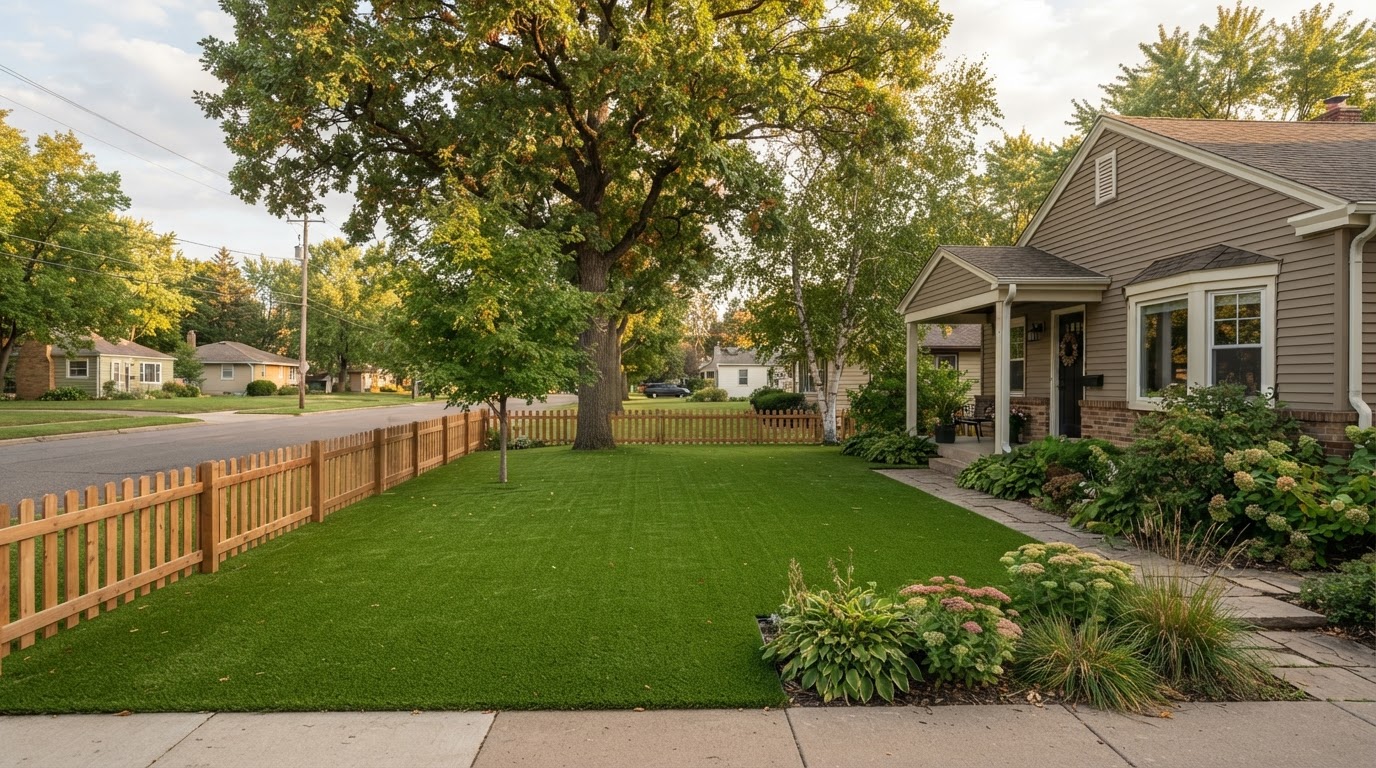
Illustrative turf example: a modest Minnesota residential yard with a clean, even, lush green artificial lawn, a low wood fence, and deciduous trees in soft late-afternoon light

Brooklyn Park, Minnesota installation

Artificial grass installation in Brooklyn Park, MN

Brooklyn Park Premier Artificial Grass installs residential artificial grass lawns that stay green without mowing—a clean, usable surface built on a well-planned base. This page covers full lawn installation: the base, the turf, the seams and edges, what drives cost, and when natural grass may be the better call. A free on-site assessment leads to a written scope and quote, and approved work is scheduled from there.

Illustrative turf example shown. Images are not completed customer jobs.

Request a Free Estimate

Tell us about your project. We follow up to schedule an on-site assessment.

Project address

Text message consent (optional)

Consent is not a condition of purchase. See our Privacy Policy and Terms & Conditions.

What installation includes

What is included in artificial grass installation?

A residential lawn installation is a full system, not a single layer. The work covers the subgrade and any excavation needed, a compacted aggregate base, a permeable backing that moves water through the surface, the polyethylene turf itself with its pile height and thatch, infill that holds the fibers upright and adds feel, seaming tape and adhesive where rolls meet, and perimeter edging that secures the edges. Each layer is chosen for your lot and how the lawn will be used.

This page covers full residential lawn installation—converting a lawn to a clean, low-mowing surface. The homepage covers the brand and the broad idea, and the services overview compares all five applications. Here we go deeper on what a lawn installation actually involves, from base to edge.

You can request a free estimate on this page, call us at (763) 308-7974, or read our FAQ for direct answers.

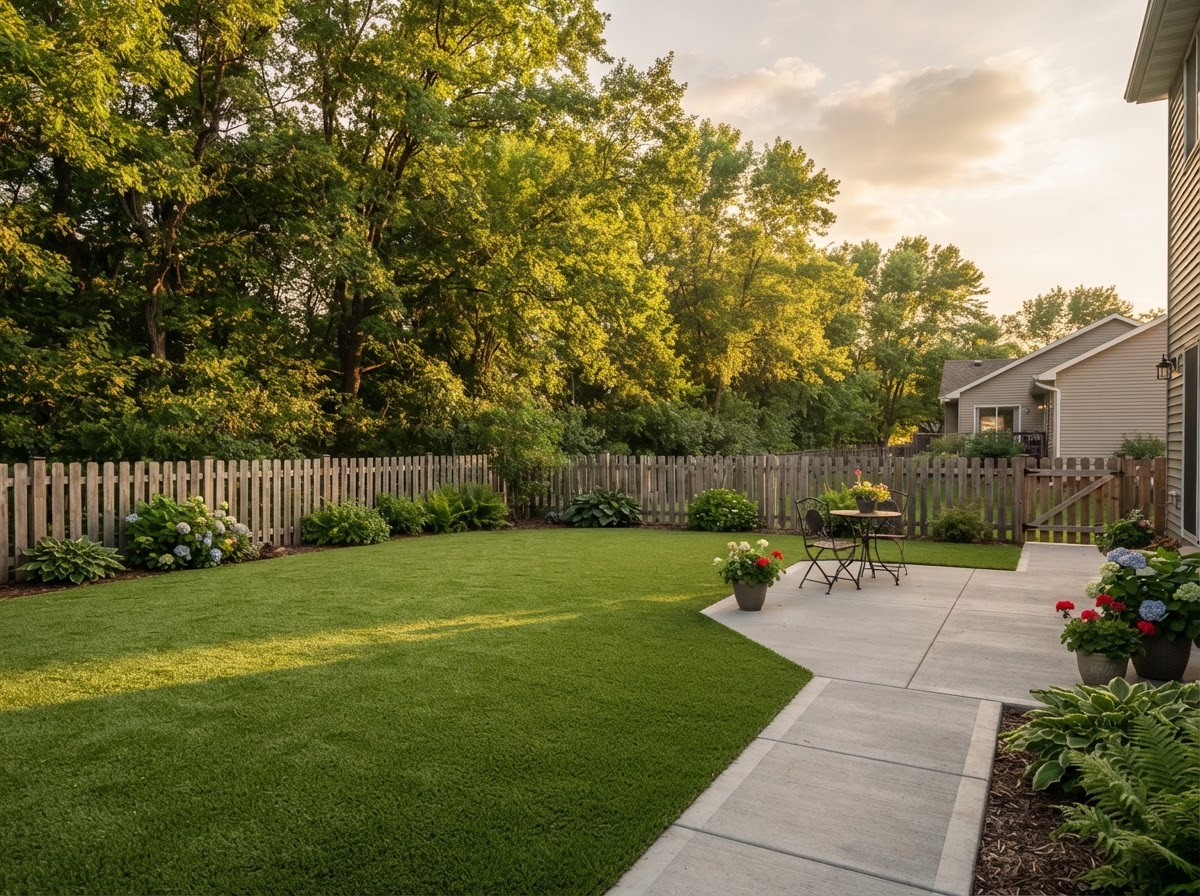
Illustrative turf example: a tidy transition where a green artificial turf lawn meets a concrete patio and garden-bed edging in a modest suburban backyard
Turf meeting a patio edge, illustrative example.

Where installation applies

A lawn plan built around your property

Installation applies to more than one kind of yard. Each block below describes what and where it applies, how it is built with real materials, and the outcome you can expect.

Complete lawn conversion

A full residential lawn replacement—removing the existing grass and installing a clean, even synthetic surface across the whole yard. This is the most common installation in Brooklyn Park, where a worn or hard-to-grow lawn is converted to a low-mowing, low-water surface.

We excavate or prep the existing surface, grade and compact an aggregate base, lay a permeable backing, seam the turf with tape and adhesive, add infill to hold the fibers upright, and secure perimeter edging so the edges stay flush with walks and beds.

The result is a tidy, even lawn that stays green through the season without mowing or watering, drains where the base was planned to drain, and holds up underfoot where the base was compacted properly.
Side-yard and compact-space installation

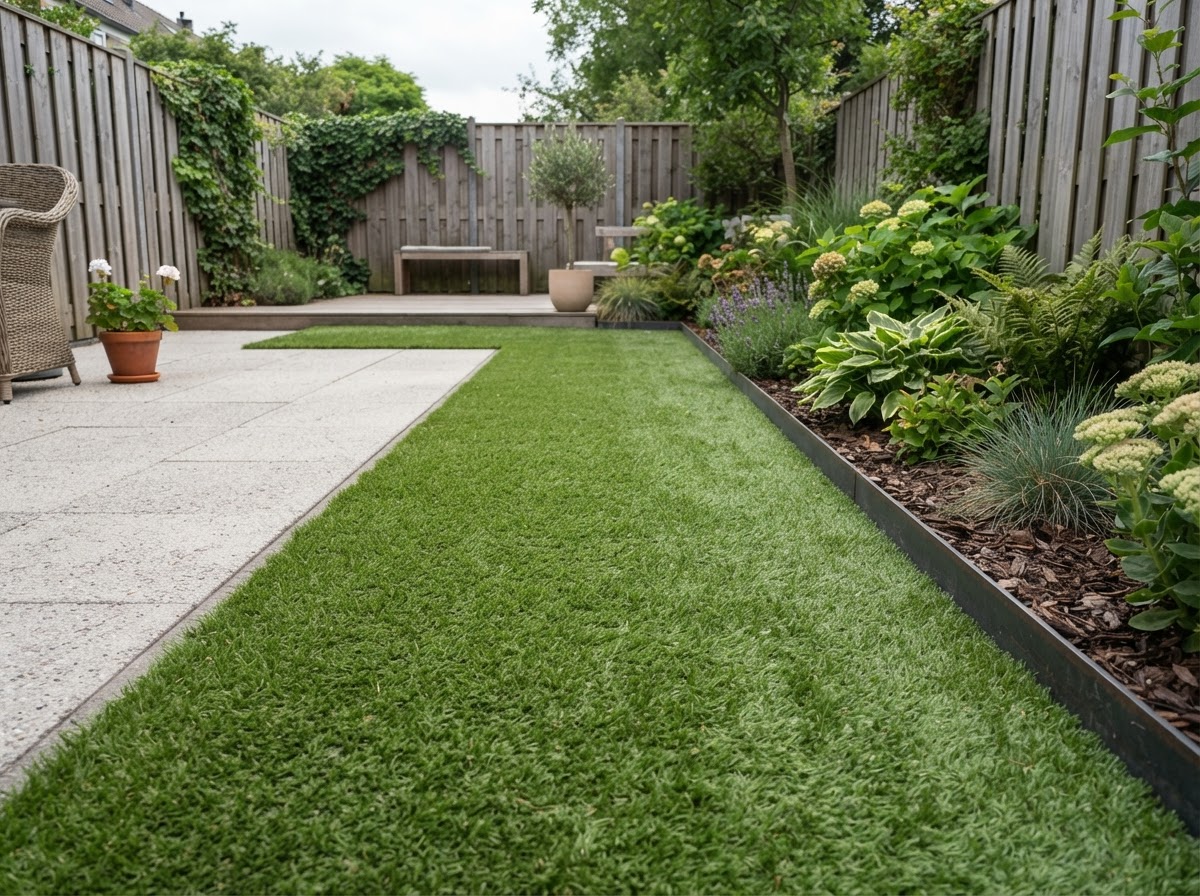
A narrow side yard, a strip between the house and a fence, or a small front patch where grass will not grow or a mower will not fit. These compact spaces benefit most from a clean, defined surface that needs no mowing access.

Access for equipment and material shapes the work here. We plan how material reaches the space, prep and compact the base within the narrow footprint, seam to the minimum number of rolls, and edge against the fence line and any hard surface.

The result is a usable, even strip that stays clean without a mower, with seams kept to a minimum and edges secured so the narrow surface does not lift or curl at the borders.

Turf transitions beside patios and garden beds

Installing turf so it meets a patio, walkway, or garden bed cleanly—the edges and transitions that frame a lawn. This is often part of a larger install or a refresh where the border detail matters as much as the field.

We set the turf elevation to meet the hard surface flush, secure perimeter edging at the transition, keep grain direction consistent across the seam, and shape the edge against mulch or planting beds so the border stays defined.

The result is a clean transition with no lifted edges or trip lines, a consistent surface that frames the patio or bed, and a border that stays tidy because the edging was secured, not just trimmed.

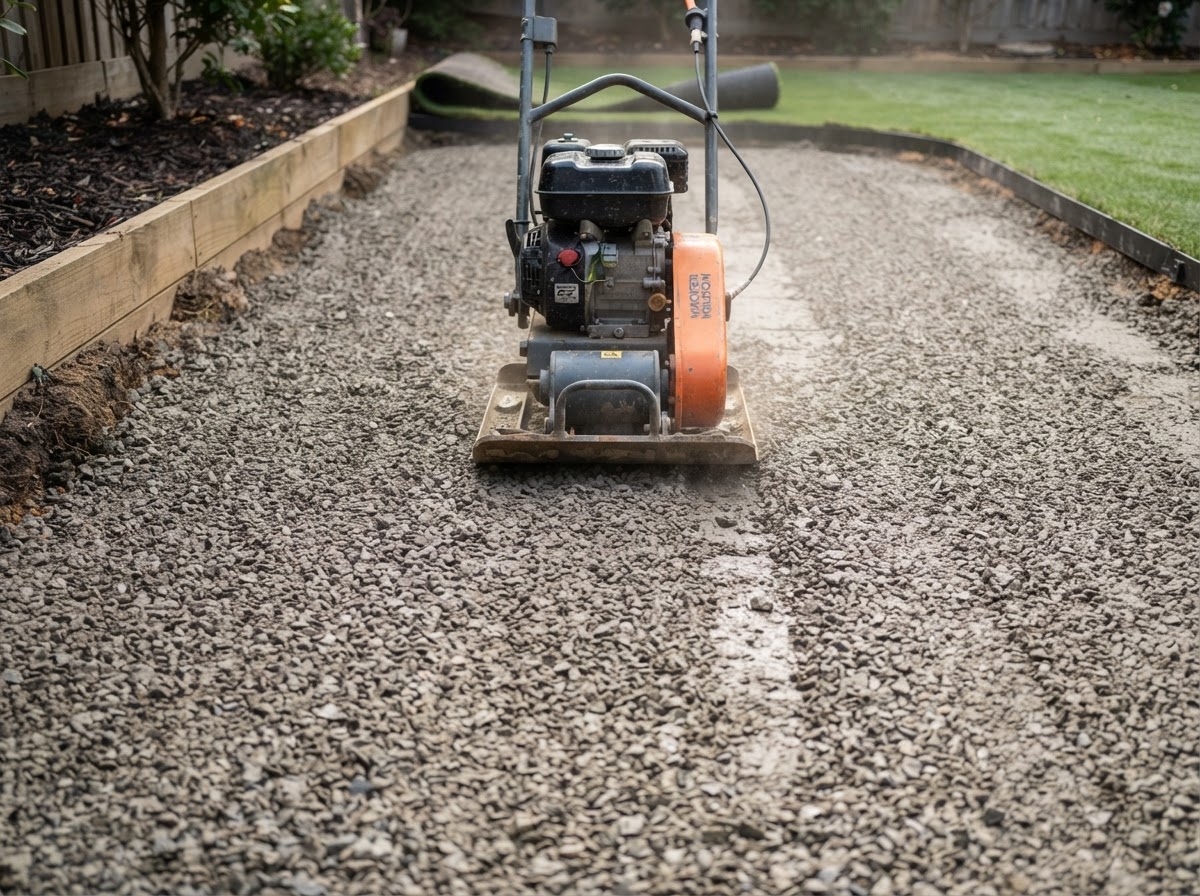
Illustrative turf example: a prepared compacted aggregate gravel base being leveled with a plate compactor before artificial turf is laid
Compacted aggregate base before turf, illustrative example.

Base and drainage

Why base preparation matters in Brooklyn Park

The visible turf is the top layer. Underneath sits the subgrade, a compacted aggregate base, and a permeable backing that lets water move through instead of pooling on top. If the base is uneven or poorly drained, the surface shows it: low spots hold water, seams open, and the fibers mat down where feet and snowmelt collect. Plate compaction of the aggregate is what gives the base a stable profile the turf can sit on.

Minnesota snowmelt and freeze/thaw cycles make that base work relevant, but we assess site conditions individually—we do not assume every Brooklyn Park lot is clay. We look at your soil, your slope, and where water enters and exits before we decide the base profile or the turf product. Drainage is planned for your yard, not assumed from a neighborhood average.

Turf does not by itself fix poor drainage. The base and drainage plan do. If a low spot needs regrading or an outlet, that is part of the scope we quote—not something the turf layer corrects on its own. We will say plainly when a drainage issue needs more than a new surface.

Product selection

Which turf suits your yard?

Lawn turf comes in different pile heights, thatch densities, and face weights. A taller pile with thatch reads as a natural lawn and feels softer underfoot; a shorter, denser face wears better under traffic. Polyethylene fibers are the common residential choice for look and feel. We help you compare samples, pile height, and infill so the product matches how the yard is actually used.

Infill holds the fibers upright and changes how the surface feels and drains. A rounded infill is common for lawns; a denser or deodorizing infill belongs in a pet area. If your yard is for dogs, a pet-specific system is the right fit rather than a lawn product. If you want a practice surface, a putting green is a different product again.

Grain direction is kept consistent across the lawn so the color reads even, and seams are laid so they fall where they are least visible. Those details are part of the layout conversation, not afterthoughts.

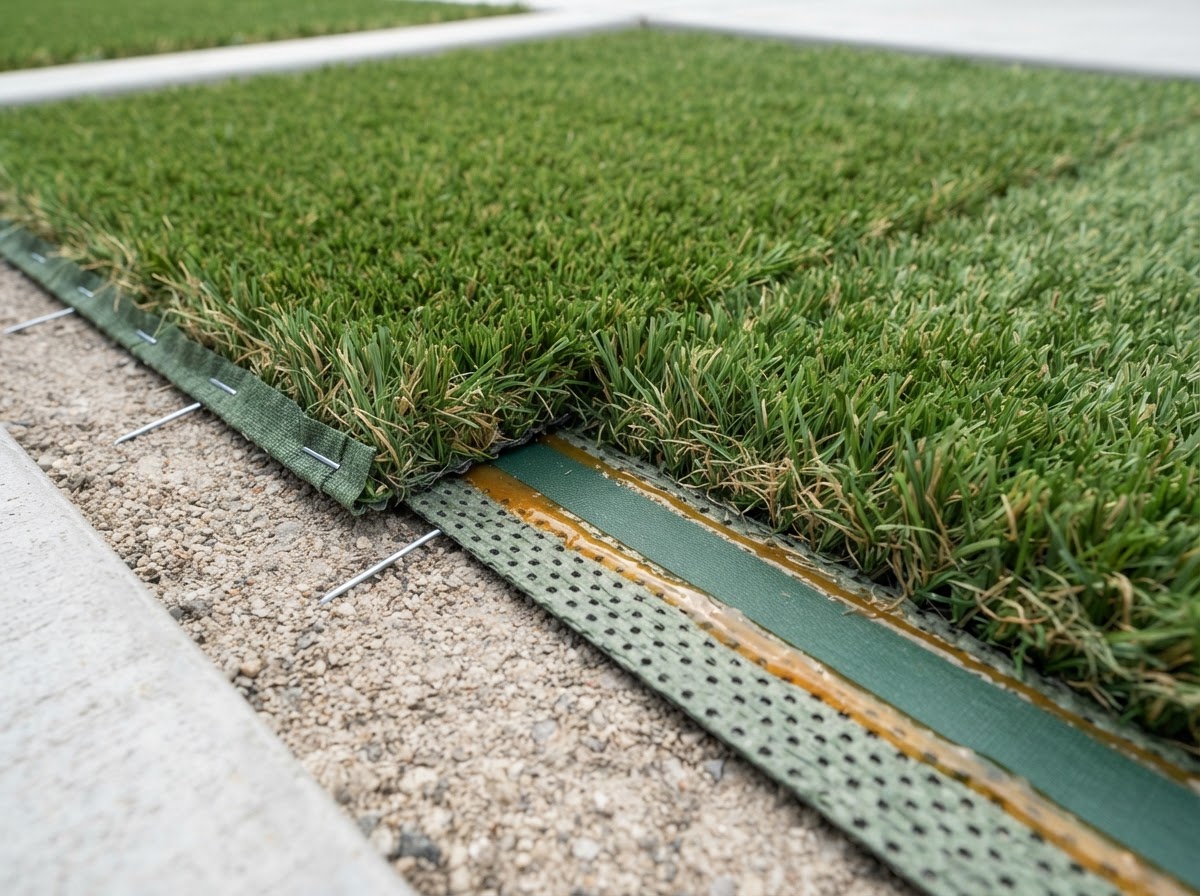
Illustrative turf example: two rolls of green artificial grass being joined with seaming tape and adhesive along a flat seam with perimeter edging secured
Seam joined with tape and adhesive, illustrative example.

How we plan the install

How does installation work?

The same four decisions shape every lawn install. We document them in your written quote so you can compare any installer on the same terms—not just a square-foot number.

  1. 1

    Intended-use turf choice

    We match pile height, thatch, backing, and infill to how the yard is used—a lawn, a play area, or a space that borders a patio—so the surface performs instead of just looking green on day one.

  2. 2

    Stable base design

    We assess your soil and slope, then grade and compact an aggregate base to a consistent profile. The base is what keeps the surface even through freeze/thaw and snowmelt, not the turf alone.

  3. 3

    Drainage outlets assessed

    We trace where water enters the yard and where it can exit, then plan the base and backing to move water through rather than across the surface. Drainage is planned for your lot, not assumed.

  4. 4

    Careful grain, seam, and edge detailing

    Grain direction stays consistent, seams join with tape and adhesive on a flat base, and perimeter edging is secured so edges do not lift at walks and beds. Detailing is where a tidy install stays tidy.

From inquiry to walkthrough

What affects installation cost?

The process exists so the quote matches your lot and the install matches the quote. Cost follows the scope, and the scope follows the assessment.

  1. 1

    Assess use, access, and measurements

    We talk through how the yard is used, then measure the area and check slope, soil, drainage paths, and equipment access on site.

  2. 2

    Evaluate grade and water paths

    We look at where water enters and exits and whether the existing subgrade can be graded and compacted or needs more aggregate. Drainage is planned before the product is chosen.

  3. 3

    Agree turf, layout, and written scope

    You see samples, pile heights, and infill options; we agree on layout and grain direction, then send a written quote with materials, price, and timing.

  4. 4

    Remove and prepare as required

    We remove or prep the existing surface and build the compacted base to the profile your lot needs—no prescribed universal excavation depth, just what the conditions call for.

  5. 5

    Install base, turf, seams, edges, and infill

    We compact the base, lay the turf, seam with tape and adhesive, add infill, and secure perimeter edging, keeping grain direction consistent.

  6. 6

    Walkthrough and product-specific care

    At walkthrough we show the work and explain grooming, infill checks, and cleanup so you know how to keep the surface even.

Pricing scope

What drives the quote

A written quote should describe the area, the turf product and infill, the base and drainage work, any excavation and disposal, the seam count, the perimeter edging, the price, and the timing. We include all of these so you can compare quotes on the same terms—not just a per-square-foot number.

A regional price reference, not our quote.

For rough planning only: a regional installer (River Bluff Landscaping, Rochester, MN) publishes installed-lawn budgets of roughly $8–$20 per square foot. That is a published Rochester, MN regional price reference—not our quote and not a Brooklyn Park rate. Applied to a 500 sq ft lawn, that range is $4,000–$10,000 as a planning illustration, not an offer, and installed-rate examples can already include some preparation. Your actual price is set in the written quote after we see the property.

Request a Free Estimate

Tell us about your project. We follow up to schedule an on-site assessment.

Project address

Text message consent (optional)

Consent is not a condition of purchase. See our Privacy Policy and Terms & Conditions.

Honest limits

When is natural grass a better choice?

Artificial grass is a good fit when you want a clean, low-water surface that stays green without mowing, when a lawn is worn from foot traffic, or where natural grass will not grow because of shade or slope. It is not a cure-all, and we will say so.

Turf can get hot in direct sun—more than natural grass—because the fibers hold the sun’s energy. It needs maintenance: grooming to lift fibers, infill checks and top-ups, and debris cleanup, even if less than a mowed lawn. It costs more upfront than seeding or sodding. And it does not by itself fix poor drainage; the base and drainage plan do that, and a bad base will fail under any turf.

If a spot is better served by natural grass, a different groundcover, or a drainage fix before any surface goes down, we say so before we quote. That honesty is part of the estimate. If your existing turf needs a refresh rather than a full replacement, see our repair and maintenance page.

Illustrative turf example: a modest Minnesota residential yard with a clean even green artificial grass lawn meeting a concrete patio and garden-bed edging under soft late-afternoon light
Residential lawn turf meeting a patio edge, illustrative example.

Installation questions

Installation questions

Direct answers to the questions we hear most about lawn installation. For the full set, see our FAQ page.

What drives the cost of an artificial grass installation?

Area size, the turf product and infill, any excavation and disposal of the existing surface, the base and drainage work your lot needs, equipment and material access, the seam count, and the perimeter edging and infill. A square-foot price alone does not show what is included. Compare removal, base preparation, drainage, infill, edging and access in the written scope, because installed-rate examples may already include some preparation. We quote the full scope after seeing the property. For rough planning only, a regional installer (River Bluff Landscaping, Rochester, MN) publishes installed-lawn budgets of about $8–$20 per sq ft—a Rochester, MN regional price reference, not our quote or a Brooklyn Park rate.

How much ground preparation does my lawn need?

It depends on the lot. We assess slope, soil, existing surface, and where water enters and exits, then decide the base profile—whether the existing subgrade can be graded and compacted or whether more aggregate is needed. We do not prescribe one universal excavation depth; the base is built for your conditions. The written quote describes the base work in scope so you can compare it line by line.

Will artificial grass fix standing water on my lawn?

Not by itself. Turf does not correct poor drainage; the base and drainage plan do. We look at where water collects and where it can exit, then build the base and choose a permeable backing that moves water through rather than across the surface. If a low spot needs regrading or an outlet, that is part of the scope we quote—not something the turf layer fixes on its own.

When can you install, and can turf go in over winter?

A start date is set after you accept a written quote, based on weather, material availability, and our install calendar. Turf can be installed in cold weather if the base can still be prepped and compacted, but frozen ground limits base work and we will not force a start in conditions that compromise the base. We do not guarantee a start date at the inquiry stage.

How does snow and freeze affect an installed lawn?

Minnesota snowmelt and freeze/thaw are exactly why the base and drainage plan matter. A properly compacted aggregate base with planned drainage sheds snowmelt instead of holding it, which helps the surface stay firm and even through spring. Snow removal needs the right tool—something that won't pull fibers or lift seams—and we explain that at walkthrough. We do not claim turf is maintenance-free through winter.

How much maintenance does an installed lawn need?

Less than a mowed lawn, but it is not zero. Plan on grooming to lift matted fibers, periodic infill checks and top-ups, leaf and debris cleanup, and occasional rinsing. We explain product-specific care at the walkthrough so you know what was installed and how to keep it even. See our repair and maintenance page for ongoing service.

Do I need a permit or HOA approval for installation?

Possibly. Brooklyn Park engineering notes that right-of-way grading or excavation can require review or a permit, and your HOA may have its own rules on turf, edging, or curb transitions. We assess scope, HOA, and drainage or easement questions with the city as part of planning. Confirm with your HOA before scheduling.

Request a site-specific estimate

Request a site-specific estimate

Tell us about your lawn and we’ll follow up to schedule an on-site assessment and send a written quote with the base, turf, seams, edges, and infill scoped to your lot. You can also call us at (763) 308-7974.

Request a Free Estimate

Tell us about your project. We follow up to schedule an on-site assessment.

Project address

Text message consent (optional)

Consent is not a condition of purchase. See our Privacy Policy and Terms & Conditions.

CallFree Estimate